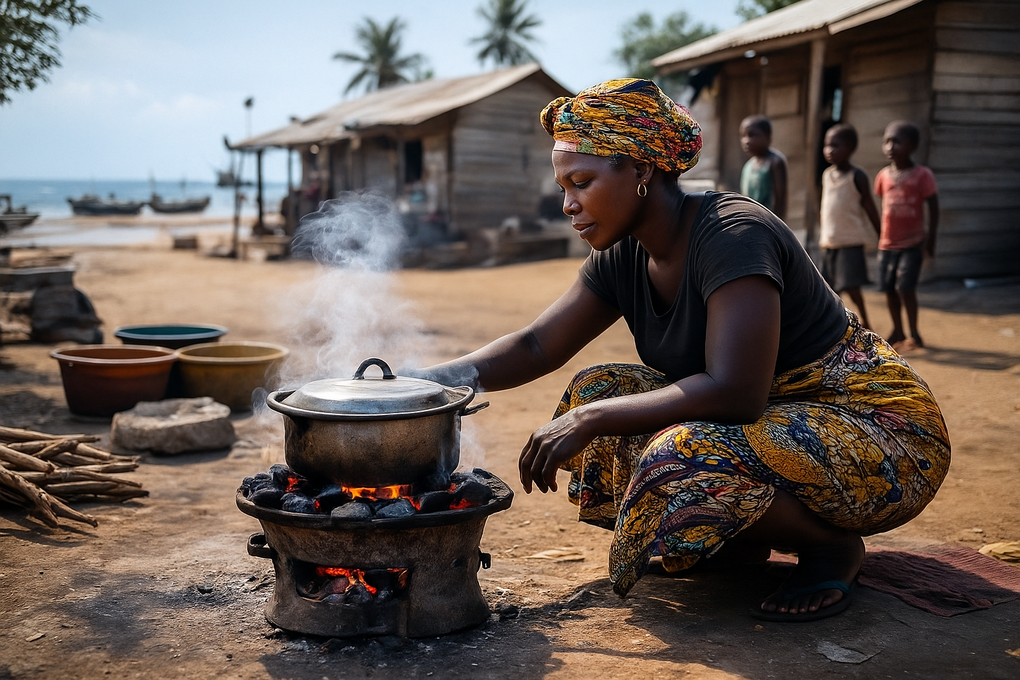
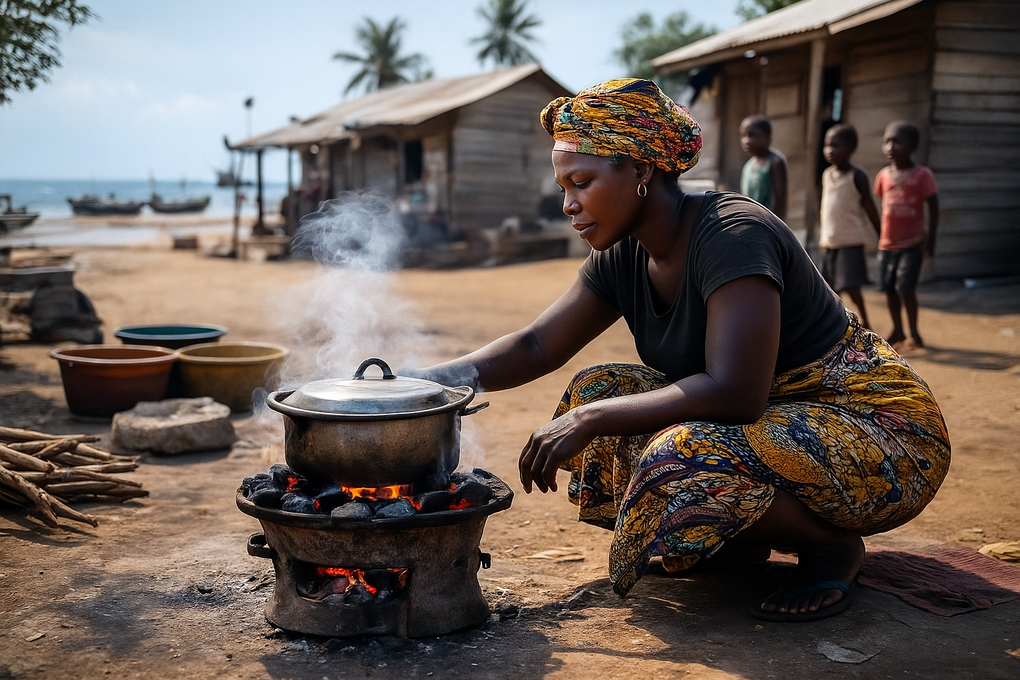
• The Hawa Benson Charcoal Project reimagines what a small community can achieve when it takes control of its most essential resource. With a modest budget and strong local commitment, residents are creating affordable access to charcoal, new jobs, and a foundation for future development.

Published
$170.00 of $890.00 goal

Tax deductible in USA

Drag to Reposition Cover Photo

About The Project

Detailed Plan of What the Project Will Do

The Hawa Benson Charcoal Project is designed as a small but highly practical intervention to reduce charcoal costs and strengthen household stability in the Fishing Village. Here is what the project plans to accomplish step by step:

Procurement

  • Purchase 200 bags of charcoal at wholesale pricing ($2.40 per bag).

  • Source the charcoal from interior producers where prices are lowest.

  • Coordinate trusted transporters to move the shipment from bush areas to the Fishing Village.


Transport & Handling

  • Pay interior laborers to fill and load the charcoal bags.

  • Pay local workers in the village to offload the truck upon arrival.

  • Store all charcoal in Hawa Benson’s existing warehouse — avoiding rental fees.


Local Distribution

  • Sell charcoal locally at an affordable community price, still generating enough margin to sustain the project.

  • Supply both households and small sellers with reasonably priced bags, increasing household savings and supporting micro-businesses.

  • Keep prices stable year-round, especially during dry-season scarcity, when costs usually rise sharply.


Economic Impact

  • Create 10 jobs for local residents (loading, offloading, stock management, and retailing).

  • Reinforce household income by reducing charcoal expenses for 8,000+ residents.

  • Reinvest a portion of profits into future phases and community needs.


Budget Table (Full Breakdown & Net Required Amount)

Item Details Cost (USD)
Purchase of charcoal bags 200 bags @ $2.40 $480
Transportation 200 bags @ $1.30 $260
Purchase of empty bags 200 bags @ $0.40 $80
Labor – Loading (Interior) 5 workers @ $5 $25
Labor – Offloading (Village) 4 workers @ $5 $20
Total Project Budget $890
Community Contribution Provided by project members – $150
Net Needed to Fully Fund Project $740


Paying it Forward

The Hawa Benson Charcoal Project embodies the spirit of paying it forward by bringing lasting relief to families in the Fishing Village. Through affordable charcoal, the project reduces daily household expenses; through local employment, it strengthens income for community members; and through profit-sharing, it reinvests earnings back into the village. With a modest budget of $890—supported by a $150 community contribution—the project creates access to essential fuel, supports small sellers, and establishes new economic opportunities in a place where every dollar counts.


Sustainability & Revenue Recovery Plan

1. Revenue Generation Model

  • Wholesale Purchase: 200 bags of charcoal are bought at $2.40 per bag.

  • Retail Sale: Charcoal is sold within the community at a fair but profitable price that remains below local market rates.

  • Monthly Sales Capacity: High demand in the Fishing Village allows the project to sell 400 bags per month (200 from each cycle).

  • Projected Monthly Revenue:

    • 200 bags sold twice monthly at $3.70 each → $1,480/month.

  • Projected Monthly Profit:

    • Revenue: $1,480

    • Less costs: $960

    • Net profit: approximately $520 per month


2. Profit Allocation Structure

To ensure longevity and community ownership, profits are divided as follows:

Category Percentage Purpose
Owner/Leader 25% Leadership support & operational oversight
Community Workers 20% Wages for loading, offloading & sales
Reinvestment Into Project 40% Purchasing next batch of charcoal & scaling operations
Community Savings Fund 15% Future community improvement projects

3. Sustainability Mechanisms

  • Reinvestment ensures continuity:
    40% of monthly profits are dedicated to replenishing charcoal stock, allowing the project to operate without outside funding after the first cycle.

  • Warehouse storage reduces overhead:
    The warehouse donated by Hawa Benson eliminates rental expenses, preserving cash flow.

  • Predictable demand stabilizes income:
    Charcoal is essential in Liberia; this guarantees consistent sales and recurring revenue.

  • Community labor integration builds loyalty:
    Workers are paid from profit, creating shared motivation to protect and sustain the project.


4. Long-Term Impact

  • The project becomes self-sustaining after the first sales cycle.

  • Household charcoal costs remain consistently low.

  • Local employment becomes stable and predictable.

  • Profit-sharing encourages accountability and long-term growth.

  • Over time, the community savings fund creates opportunities for new initiatives, multiplying the impact beyond the original $890 investment.


View More Project Info

  • What's New
  • Development Goals
  • Project Location
  • Project Funders
  • Key People Involved
  • More Photo/Video

Funding Report

Backstory

In the Fishing Village, the struggle with charcoal has been a quiet burden for years. Families rely on it for every part of daily life—cooking, boiling water, caring for children—yet the price rises faster than most people can earn. When a single bag costs nearly a full day’s income, households stretch meals, skip heating water, or borrow from neighbors who are already stretched thin themselves.

What makes the hardship heavier is that no one in the community controls the supply. Charcoal arrives when it arrives, costs what it costs, and families simply have to cope. Mothers who sell small goods in the market, fathers who bring home modest earnings from fishing, and young people trying to support siblings all feel the same pressure: no matter how hard they work, charcoal eats into everything.

It was this constant strain—not one dramatic moment—that pushed Hawa Benson and her group to act. They know the village, they know the needs, and they know how long people have been waiting for relief that never comes. So they decided to start something manageable, practical, and theirs. By purchasing charcoal wholesale and selling it locally at a fair price, they could lower the daily cost of living, create reliable work for their neighbors, and finally keep more resources inside the community instead of watching it leave.

Their contribution of $150 isn’t just money—it’s proof of commitment from people who have very little to spare. The project is small in budget but big in impact: it gives families breathing room, strengthens local income, and shows what can happen when a community chooses to solve one problem at a time, even in a place where everything is hard and everyone is doing their best to get by.

What's New

  • Deepak Sharma

    Goal Amount : $890.00

  • Mauricio Miller

    Goal Amount : $890.00

There are no more results to show.

United Nations Sustainable Development Goals

Information

Basic Information

  • Created By : Cara Hagemeyer
  • Published On : Dec 8, 2025, 11:21 AM
  • Funding Ends : Dec 31, 1969, 4:00 PM
  • Backer :
  • Address : -
  • Phone : -
  • Email : -
  • Description :

    In the Fishing Village, the struggle with charcoal has been a quiet burden for years. Families rely on it for every part of daily life—cooking, boiling water, caring for children—yet the price rises faster than most people can earn. When a single bag costs nearly a full day’s income, households

    ...  more

Project Funders

People

Photos

Map

Location Information

  • Location :